
Cataract surgery removes the clouded crystalline lens (located behind the iris) and replaces it with an intraocular lens implant with refractive power.
The principle
This refractive power can correct myopia, hyperopia, astigmatism and presbyopia depending on the implant type. The surgery is performed in most cases as day surgery under local anaesthesia.
Before surgery: the work-up
The indication is confirmed in consultation when visual discomfort affects daily life. The preoperative work-up includes biometry: measurement of the size and shape of the eye, used to calculate the implant power and choose its type according to your visual needs. An OCT scan and a fundus examination are also performed to rule out any underlying retinal disease. An anaesthesia consultation is scheduled before surgery.
The procedure step by step
The procedure is performed as day surgery and takes about fifteen minutes. Through a micro-incision of a few millimetres, the cloudy lens is fragmented by ultrasound (phacoemulsification) and aspirated; the implant is then unfolded in its place, inside the lens's natural envelope (the capsule). The two eyes are not operated on the same day: the second eye is classically operated 2 weeks after the first.
Post-operative course
Les incisions sont auto-étanches et ne nécessitent pas, dans la majorité des cas, de points de suture. Eye drops are prescribed for 1 month and a protective shield is worn at night for 1 week. Vision improves rapidly over the first post-operative days. A few simple precautions: do not rub the eye, avoid swimming pools and dusty environments for the first weeks. New glasses, if needed, are prescribed once vision has stabilised, 1 month after surgery.
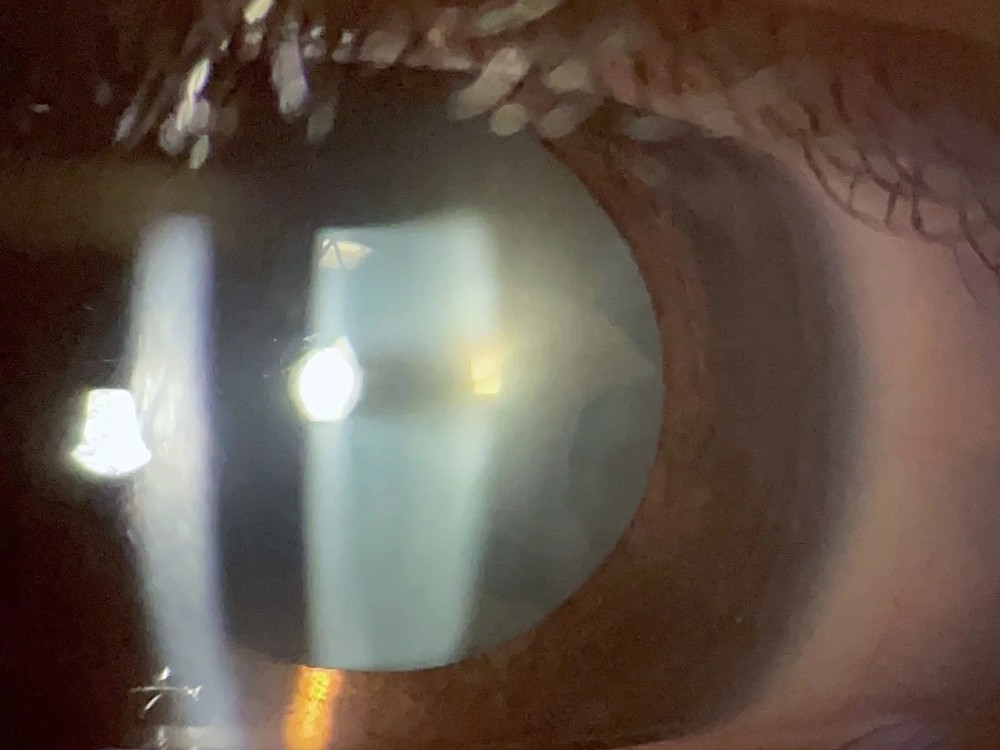
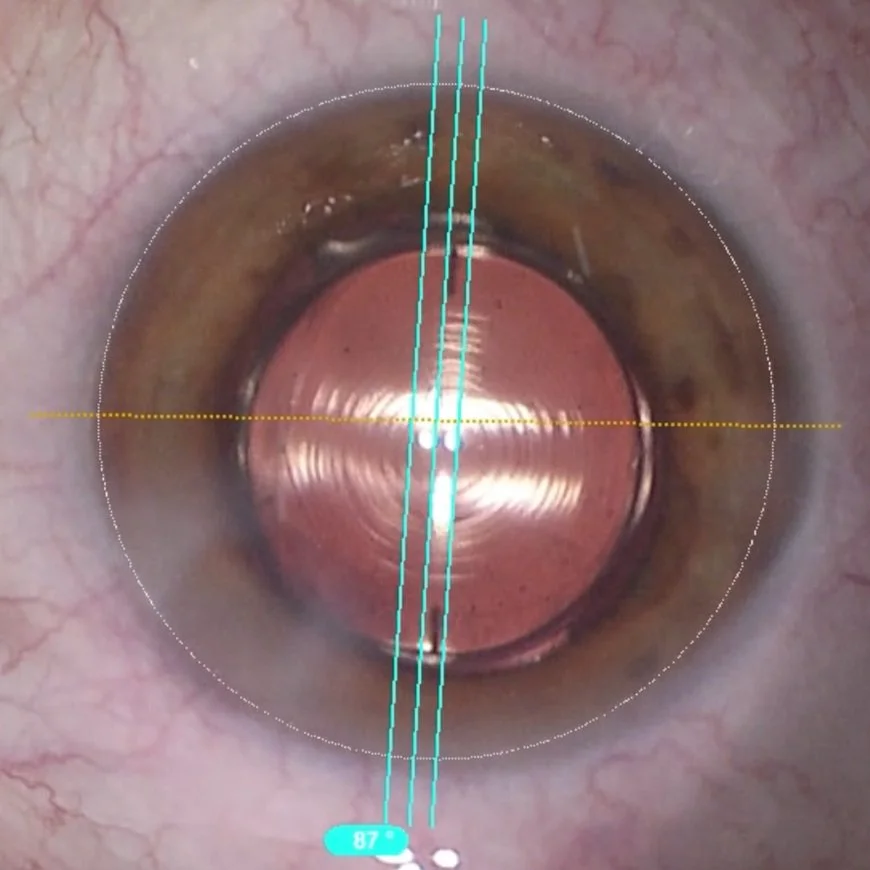
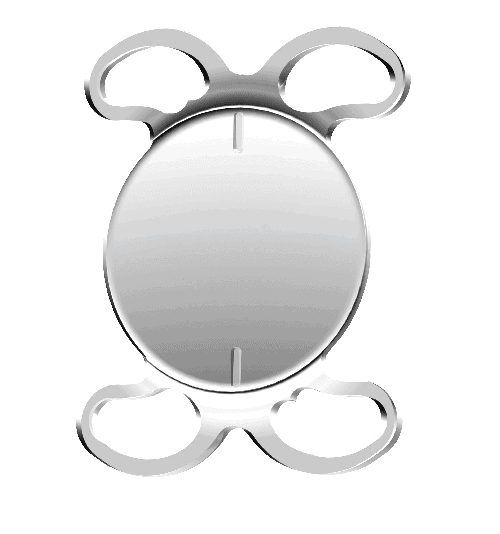
The different lens implants
Monofocal
These implants have a single focal point, designed to give clear vision at one distance, usually far. Near vision will require glasses. They correct spherical errors (myopia and hyperopia) and astigmatism. Some myopia can be left on one eye (monovision: dominant eye sharp at distance, the other at near) or on both eyes (clear near vision without glasses).
Extended depth of focus (EDOF)
EDOF (Enhanced Depth Of Focus) implants are a new generation of lenses offering sharp vision over an extended range of distances. They use advanced optics to stretch the depth of focus, letting the patient see clearly at varied distances without sacrificing visual quality. The goal is sharp vision at far, intermediate and near distances, giving relative independence from glasses in daily life. Reading glasses remain necessary for prolonged fine near work (intensive reading). These implants have few side effects and can be offered in many cases.
Multifocal
Multifocal implants are designed to give sharp vision at several distances — near, far and intermediate. They split the light entering the eye into several focal points, allowing the patient to see clearly at different distances without glasses. However, they are not suitable for all patients (contraindicated in glaucoma, AMD…) and can in some cases cause more significant side effects (halos, reduced contrast sensitivity).
Frequently asked questions
Which implant type is best for me?
The choice of implant depends on many factors, such as your visual needs, personal preferences and budget. The pre-operative consultation determines the most suitable implant for each patient.
Do cataract implants last a lifetime?
Yes, cataract implants are designed to last the patient's lifetime. An in-office laser treatment may be needed in case of secondary cataract.
What is a secondary cataract?
A secondary cataract is an opacification of the capsule just behind the implant that replaced the lens. It is easily treated with a YAG laser in the office.
Is cataract surgery painful?
Cataract surgery is usually performed under local anaesthesia with intravenous sedation. Most patients feel no pain during the procedure. Afterwards you may feel some discomfort or slight irritation, which usually improves within a few days.
Are both eyes operated on at the same time?
No: the two eyes are operated on separately, classically 2 weeks apart. This makes it possible to check the result of the first eye and, if needed, adjust the implant choice for the second.
What are the risks?
It is one of the most frequently performed operations in the world and its benefit/risk ratio is very favourable. As with any surgery, complications remain possible but rare; they are detailed in the SFO information sheet given at the consultation (downloadable at the bottom of this page). Prompt examination is needed in case of intense pain, redness or reduced vision in the days after surgery.
Who performs cataract surgery in Boulogne-Billancourt?
Dr Léo Prud'homme, an ophthalmic surgeon trained at the Quinze-Vingts National Vision Hospital, performs the preoperative work-up at the Ophtalife practice in Boulogne-Billancourt and operates at the Ambroise Paré clinic (Neuilly-sur-Seine) and the Jouvenet clinic (Paris 16th). He performs nearly 800 surgical procedures a year.
When can I resume my activities?
Most daily activities resume within a few days. Driving is possible as soon as vision is sufficient, and sports resume gradually, avoiding swimming pools for the first weeks. The date of return to work depends on your activity and is discussed at the consultation.
Where to consult for cataract surgery near Paris?
The consultation and preoperative work-up (biometry, OCT, fundus examination) take place at the Ophtalife practice in Boulogne-Billancourt, at the gates of the 16th arrondissement. The operation is performed as day surgery in a clinic in Paris or Neuilly-sur-Seine, with follow-up at the practice.
Pour aller plus loin : la cataracte (la maladie), la cataracte secondaire, la chirurgie de la cataracte à Boulogne-Billancourt — et le volet financier sur la page tarifs et remboursements.
Information sheets from the French Society of Ophthalmology
To read before your procedure — information and consent sheet (in French):
📄 Cataract surgery (SFO sheet No. 1A)PDF 📄 Secondary cataract: YAG laser capsulotomy (SFO sheet No. 2)PDFPrendre rendez-vous
Online via Doctolib — Ophtalife practice, Boulogne-Billancourt.